




The Entry Point
A specific motor inhibition: the nervous system can no longer stabilize a joint reactively, or “lock” it on demand. It is not about strength. It is about activation.
Practitioner seminar · 2 days
An assessment method for high-performance sport. We test how joints stabilize reactively to find where the nervous system has let go, instead of chasing the pain.
The problem
An athlete comes in with shoulder pain. Motor testing finds an inhibition in the hip on the other side. The shoulder is compensating.
Treating the shoulder helps for a while. Then the nervous system puts the compensation back, because the original instability is still there.
You know this patient. Better after every visit, back again a month later.
Two ideas
A specific motor inhibition: the nervous system can no longer stabilize a joint reactively, or “lock” it on demand. It is not about strength. It is about activation.
The brain's Plan B: a protective strategy, such as muscle guarding, a compensatory posture or a withdrawal reflex, adopted against a perceived threat. Useful at first, costly later, and often where the athlete hurts.
“Entry Point is a method, not a soft tissue technique.”
Dr Jeff Almon
The difference is something you feel in your hands. Here's how to look for it.
The method
The clues that direct the investigation: injuries and surgeries (scars), physical and emotional trauma, infant developmental milestones, concussions.
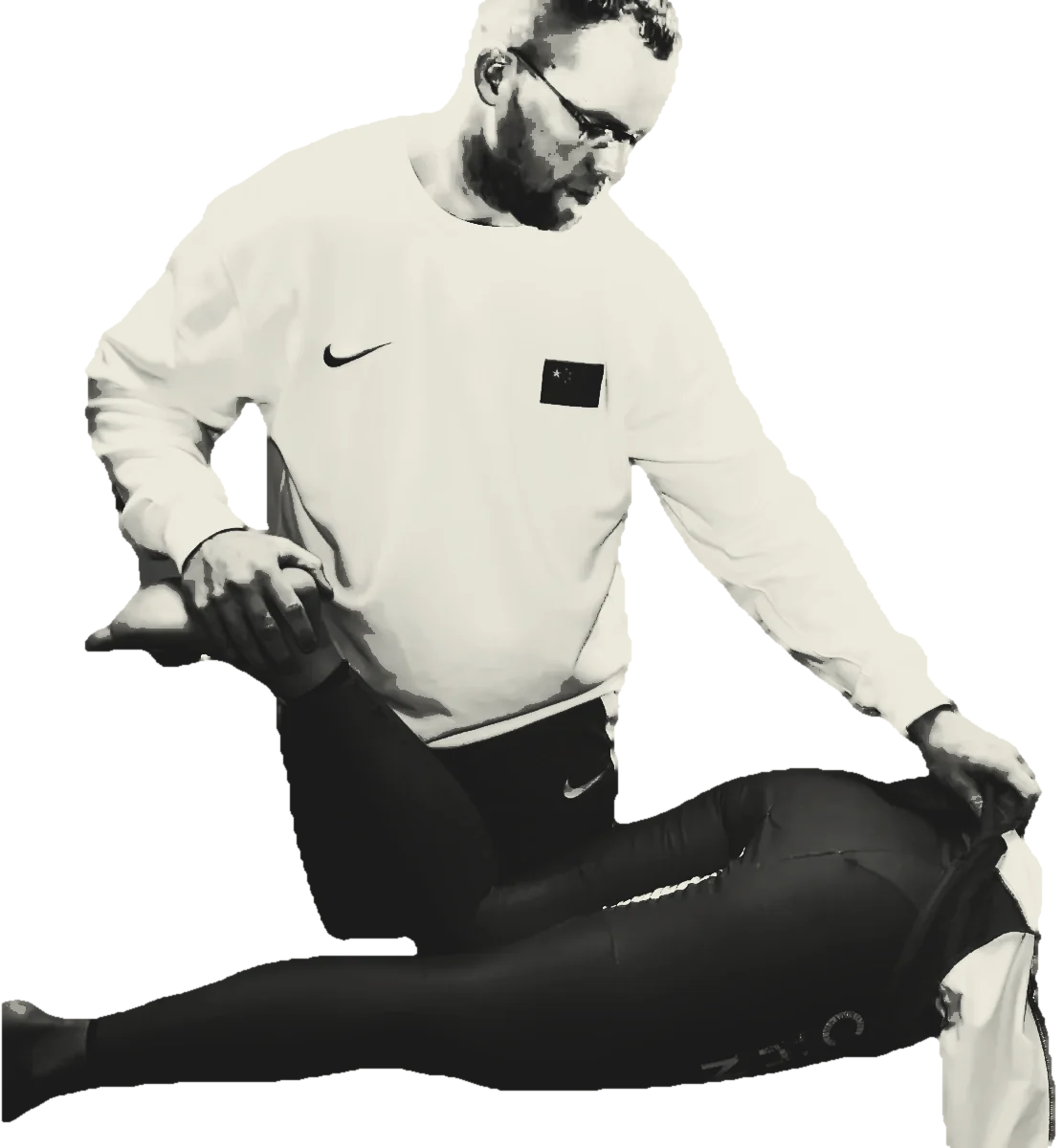
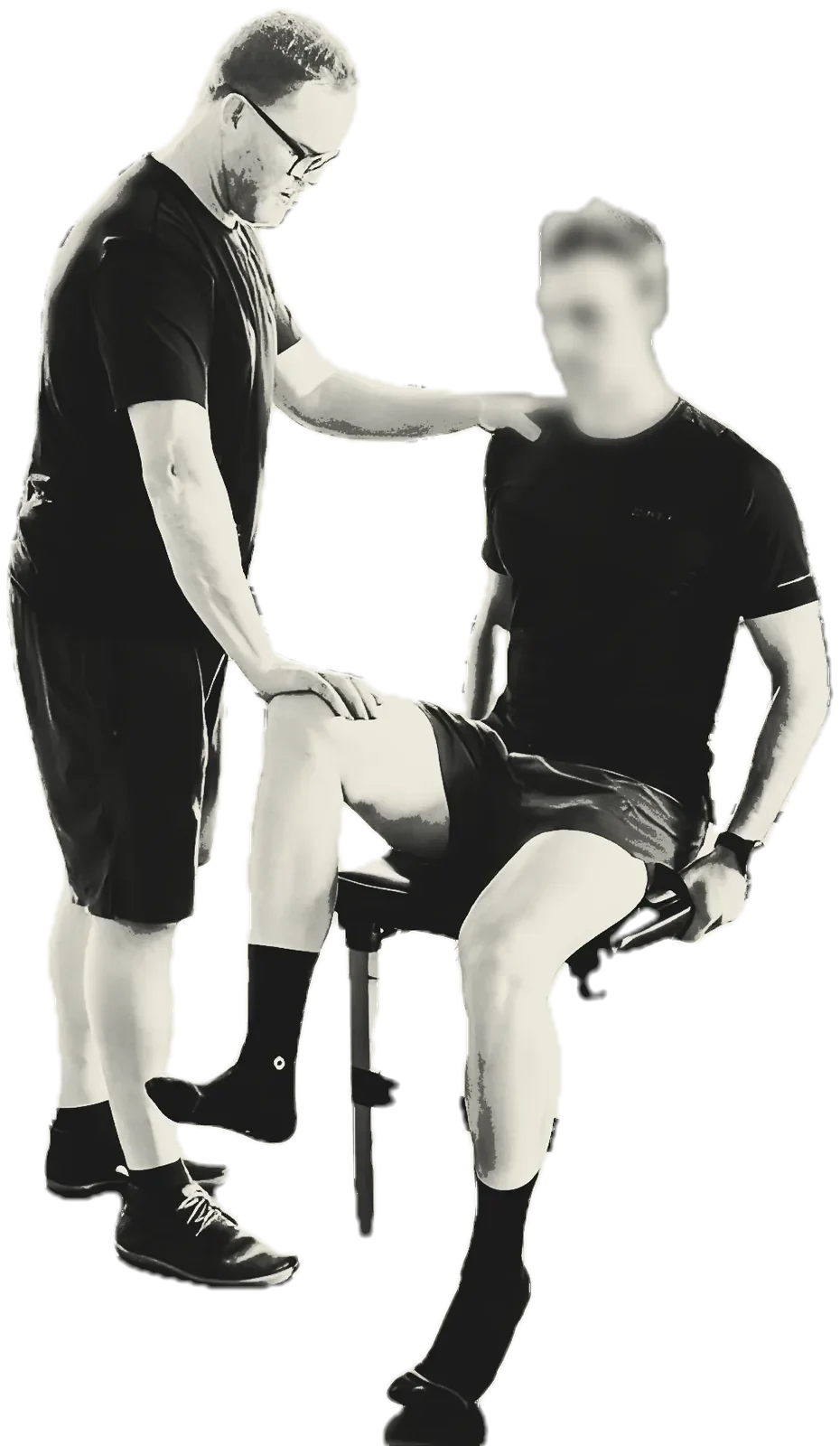
“Hold this for me.” Resistance builds to maximal over about two seconds. A positive test is not weakness: it is reactive instability. Start with the shoulder and the hip.
Inhibitions and compensations fall into six patterns: pyramidal or hemispheric, withdrawal reflex (grip or step), dural tension, limbic hijack, inhalation pattern, SIJ force-closure failure.
A novel sensory input at the sites the testing found, then an immediate retest under co-contraction: make a fist, hold a breath, extend the spine.
The six Entry Points
The nervous system's protective grammar has six words. In every one, the entry point is somewhere other than where it hurts.
From The Entry Point, a practitioner's manual, chapter 5.
The co-contraction loop
Pick a step, then press and hold the button: resistance builds over two seconds, as in the test.
An illustration of the test's logic, not a clinical result.
Hip, first test
The foundations
Functional disturbances of the nervous system, and sensory stimulation to drive change.
The blueprint of normal movement, laid down in infancy: breathing, creeping, crawling. Knowing normal is how you see abnormal.
The brain's ability to reorganize. Unlearn the costly pattern; relearn the efficient one.
The operating system: the Central Integrative State (CIS), the sum of everything the nervous system is receiving at a given moment. It decides how much of a muscle gets through.
Two days is enough to change how you test.
The seminar
Regulated health professionals in musculoskeletal and neuromuscular care: chiropractors, physiotherapists, massage therapists, osteopathic manual practitioners, naturopathic doctors, athletic therapists and kinesiologists.
This seminar is the prerequisite for DEFRAG, the loaded testing program.
Day1
Day2
Pick your city. The labs run in small groups.
Dates and fee
April 2027
Exact dates and venue to be confirmed
24 places left
Reserve a seatSeptember 2027
Exact dates and venue to be confirmed
24 places left
Reserve a seatNovember 2027
Exact dates and venue to be confirmed
24 places left
Reserve a seat$2,450
$1,950
until 90 days before the seminar
CAD, plus taxes. Seats are limited by the hands-on labs. Secure payment by Stripe.
Registration
Fill in the form, then pay on Stripe's secure page. Your seat is confirmed by email.
Bring the case you can't solve. We'll find where to start.
The instructor
Dr Jeff Almon, chiropractor (DC), founder of MVMTLAB. He practises in Saint-Sauveur (Québec) and Vancouver, with athletes and high-performance sport.
Author of The Entry Point, a practitioner's manual and companion to The Automatic State. Both books are forthcoming.
Become an instructor
Today, Entry Point is taught by its founder. The certification has three levels, and Level 3 is the teaching level. Level 3 practitioners can be invited to teach Level 1 in their region.
The Central Integrative State model, the archetypes and the motor test. Starts with the two-day seminar. Assessed by a structured clinical exam.
Complex cases with several patterns at once. Six months of supervised case management, a case log and a case presentation.
Research methods, biomarkers, youth athletes, occupational health. A case series or outcomes report from your own practice. The teaching level.
By invitation, from Level 3: teach Level 1 in your region, calibrated by the founding faculty. 15 hours of continuing education a year.
Levels and hours from The Entry Point, a practitioner's manual (forthcoming).